How to Import G9 Banana from India – Step-by-Step Guide for Buyers
Mar 02, 2026
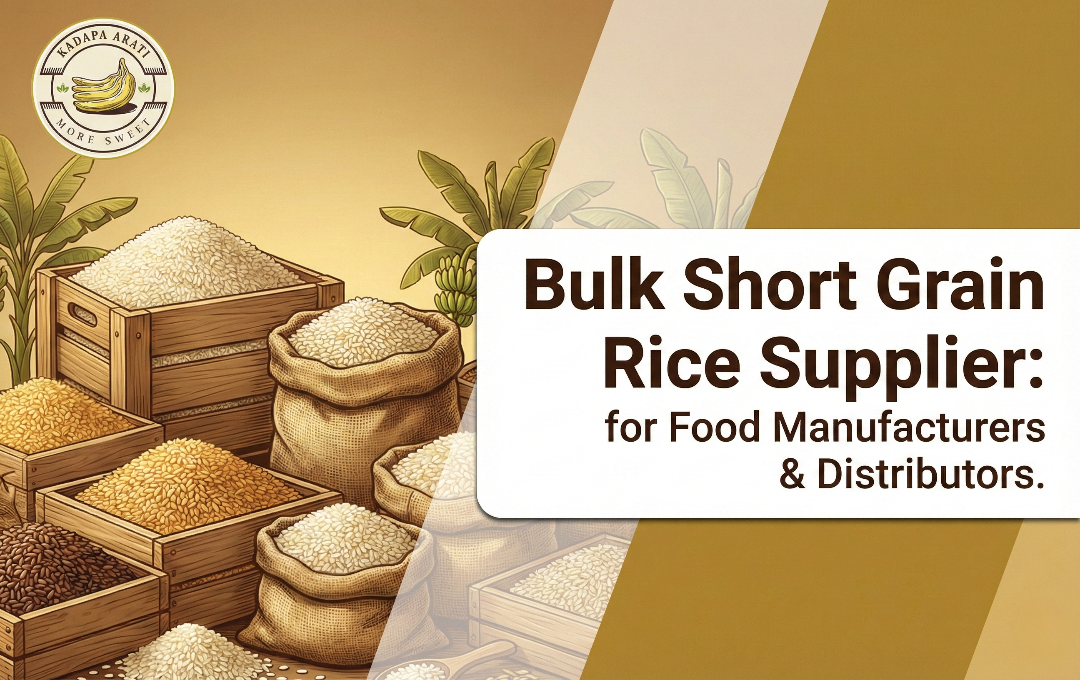
Short grain rice has quietly become one of the most function-critical raw materials in the global food supply chain. In 2026, it is no longer limited to traditional cuisines or household consumption. From sushi and ready-to-eat meals to institutional catering and processed food manufacturing, short grain rice is now a commercial staple for manufacturers and distributors worldwide.
What separates short grain rice from other varieties is not taste alone, but functional performance. Its higher starch content, natural stickiness, and uniform cooking behavior make it indispensable for industrial food applications where texture, yield, and consistency directly impact product quality and cost control.
As global demand rises, buyers are no longer asking where to buy short grain rice. Instead, they are asking which short grain rice supplier can deliver bulk volumes consistently, compliantly, and at scale.
This is where structured sourcing — and the right supplier partnership — becomes critical.
Short grain rice is characterized by its round shape, soft bite, and high amylopectin content. These properties make it especially valuable for food manufacturers producing:
Sushi, onigiri, and Asian prepared meals
Ready-to-eat and microwaveable rice bowls
Rice puddings, desserts, and dairy-based formulations
Institutional and foodservice meals requiring predictable cooking
Processed foods where rice acts as a binding or textural component
For distributors, short grain rice also offers stable repeat demand, making it a reliable wholesale category compared to specialty or seasonal grains.
Because of this, buyers sourcing short grain rice bulk supplies must evaluate suppliers on far more than price — including milling consistency, moisture control, and long-term supply capability.
Several structural trends are reshaping the short grain rice market in 2026.
First, the global ready-meal industry continues to expand, driven by urbanization and changing eating habits. Short grain rice performs better than long grain varieties in frozen and chilled formats, accelerating its adoption by food manufacturers.
Second, Asian cuisine has moved firmly into the mainstream across North America, Europe, and the Middle East. Sushi and rice-based meal kits now require dependable, high-volume sourcing rather than specialty imports.
Third, foodservice and institutional catering contracts increasingly demand cost-stable, bulk grain supply. This pushes buyers toward reliable short grain rice wholesale suppliers capable of servicing long-term contracts.
Together, these factors have transformed short grain rice from a regional commodity into a globally traded industrial ingredient.
Professional buyers follow a structured sourcing process.
Rather than relying solely on online listings, procurement teams analyze export data to assess:
Shipment frequency and continuity
Countries and buyers served
Volume consistency across seasons
This step helps buyers filter out opportunistic traders and identify serious short grain rice suppliers with manufacturing or milling control.
Once potential suppliers are identified, buyers apply strict commercial filters:
Ability to supply short grain rice bulk volumes consistently
Proven experience with export documentation and regulated markets
Customization of moisture levels, broken percentage, and milling finish
Capacity to support repeat, contract-based supply
This process eliminates most wholesalers without direct production oversight.
The global market includes both traders and manufacturer-suppliers.
Traders often aggregate rice from multiple mills, offering short-term price advantages. However, they typically lack control over batch consistency, traceability, and milling specifications — risks that become costly for food manufacturers.
In contrast, dedicated short grain rice wholesale suppliers like SLV Industries manage sourcing, processing, and quality control directly. This allows for:
Stable product specifications across shipments
Better moisture and shelf-life management
Faster resolution of quality or documentation issues
For manufacturers and distributors operating at scale, direct supplier relationships reduce operational risk.
Quality consistency is non-negotiable for industrial buyers.
Commercial short grain rice shipments are evaluated on:
Moisture content and shelf stability
Broken rice percentage
Foreign matter and contamination thresholds
Uniform cooking behavior
Export-ready suppliers also provide complete documentation, including Certificates of Analysis, traceability records, and compliance paperwork required by destination markets.
Failure in any of these areas can lead to production downtime, rejected consignments, or brand risk — which is why experienced buyers prioritize compliance-driven suppliers over spot pricing.
Bulk buyers typically source short grain rice in:
25 kg or 50 kg food-grade bags for distribution
FIBC or ton bags for manufacturing plants
Packaging must protect against moisture ingress and contamination during transit. Shelf-life performance depends on proper milling, controlled moisture, and storage conditions throughout the supply chain.
Shipping timelines vary by destination but are planned into procurement cycles to avoid production gaps. Reliable suppliers align logistics with buyers’ manufacturing schedules rather than operating on ad-hoc availability.
Pricing in the short grain rice wholesale market depends on several variables:
Grade and milling level
Order volume and contract duration
Packaging format
Shipping terms (FOB, CIF, DDP)
While spot prices fluctuate, manufacturers increasingly prefer contract-based pricing to stabilize input costs over time. This favors suppliers with scale, inventory planning, and financial reliability.
SLV Industries operates as a structured short grain rice supplier serving food manufacturers and distributors rather than retail buyers.
The company’s focus on bulk sourcing, controlled processing, export documentation, and long-term partnerships aligns with how global buyers source ingredients today. By combining supply reliability with commercial flexibility, SLV Industries supports both mid-scale distributors and large manufacturing operations.
Short grain rice is no longer a commodity purchase — it is a strategic input. Buyers who adopt data-driven supplier selection, prioritize compliance, and build long-term relationships consistently outperform those relying on spot sourcing.
For food manufacturers and distributors, working with a dependable short grain rice bulk supplier protects margins, ensures production continuity, and reduces downstream risk.
As global demand for processed and ready-to-eat foods continues to expand, short grain rice has become a strategic raw material rather than a simple commodity. For food manufacturers and distributors, supply reliability, batch consistency, and export readiness now matter as much as price.
This is where SLV Industries stands apart. As a dedicated short grain rice supplier serving bulk and wholesale buyers, SLV Industries combines controlled sourcing, consistent milling standards, export-compliant documentation, and the ability to support long-term supply contracts. The focus is not on spot trading, but on building stable, scalable partnerships aligned with industrial food production needs.
For buyers evaluating short grain rice wholesale sourcing in 2026, choosing SLV Industries is an investment in production continuity, predictable costs, and reduced supply-chain risk.
To discuss bulk requirements, specifications, MOQs, packaging formats, or export timelines, visit the SLV Industries Contact Us page and connect with the sourcing team.


Lorem ipsum dolor sit amet, consectetur adipiscing elit. Nunc quis ultrices lectus lobortis, dolor et tempus porta, leo mi efficitur ante, in varius felis sem ut mauris. Proin volutpat lorem inorci sed vestibulum tempus. Lorem ipsum dolor sit amet, consectetur adipiscing elit. Aliquam hendrerit.


Received 10% Discount on Your Next Purchase!
By submitting your email you will accept our privacy policy.