How to Import G9 Banana from India – Step-by-Step Guide for Buyers
Mar 02, 2026
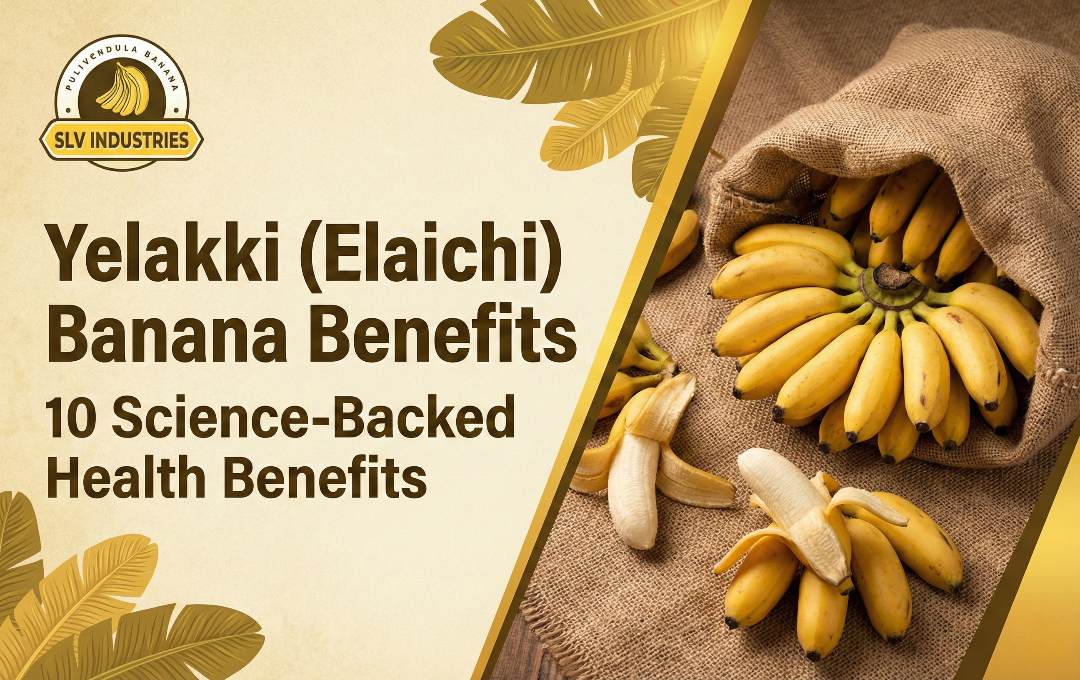
I’ll admit it — for years, I ignored the smaller bananas sitting quietly beside the big Cavendish ones. The larger ones looked more “standard.” More filling. More familiar.
But one day, I picked up a small Yelakki banana. It smelled sweeter. Almost floral. It felt lighter in the hand, easier to finish, and surprisingly more satisfying. No heaviness. No sugar crash. Just clean, steady energy.
That’s when I started paying attention.
We live in a time where people chase imported berries, powdered greens, and exotic “superfoods” from halfway across the world — while traditional fruits in local markets quietly deliver real nutrition. The rising conversation around potassium-rich fruits, gut health, and natural energy snacks has only made that more obvious.
If you’re here, you’re probably wondering about the real yelakki banana benefits, whether elaichi banana benefits are any different from regular bananas, and how the small banana benefits compare nutritionally. You might also be curious about the nutritional value of yelakki banana, and whether it truly deserves a place in your daily diet.
This guide breaks it down clearly — grounded in science, practical experience, and realistic expectations. No hype. Just what the evidence suggests and how it applies to everyday life.
Yelakki banana, often called elaichi banana due to its subtle cardamom-like aroma, is widely cultivated in South India. It’s smaller, naturally sweeter, and known for being easier to digest compared to larger commercial varieties like Cavendish.
The size difference isn’t cosmetic — it changes how people consume it.
A smaller banana means:
Easier portion control
Lower calorie load per serving
Ideal for kids and elderly
Convenient pre-workout snack
Instead of committing to a large 120–150 kcal fruit, a Yelakki banana allows controlled intake without feeling deprived. That matters for calorie-conscious individuals and those managing blood sugar.
When people talk about small banana benefits, portion flexibility is one of the most underrated advantages.
Per 100 grams, Yelakki banana contains approximately:
89 kcal
22–24 g carbohydrates
~12 g natural sugars
~2.6 g dietary fiber (about 10% of daily value)
350–360 mg potassium (about 10% DV)
~8.7 mg Vitamin C (about 10% DV)
~0.4 mg Vitamin B6 (about 20% DV)
27–37 mg magnesium
~20 µg folate
~1.1 g protein
~0.3 g fat
For its size, it’s remarkably nutrient-dense.
It stands out particularly for potassium, Vitamin B6, fiber, and Vitamin C — all critical for cardiovascular health, nerve function, and immune response.
According to the World Health Organization, adults should consume at least 400 grams of fruits and vegetables daily to reduce chronic disease risk. A Yelakki banana meaningfully contributes toward that target without overwhelming your calorie budget.
Understanding the nutritional value of yelakki banana is the foundation for appreciating its broader health impact.
Yelakki bananas contain glucose, fructose, and sucrose — three natural sugars that provide both immediate and sustained energy. The fiber moderates sugar absorption.
Research consistently shows that carbohydrate-rich fruits improve exercise performance and mental stamina. Unlike refined sugar, the fiber content prevents sharp spikes and crashes.
Ever eaten a heavy snack before a workout and regretted it? A small banana avoids that sluggish feeling while preventing energy dips.
One of the simplest natural energy foods available. Ideal as a pre-workout fruit or mid-day energy reset.
Over 1 billion people globally live with hypertension. Modern diets are often high in sodium and low in potassium.
Potassium helps excrete excess sodium and reduces vascular tension.
With 350–360 mg potassium per 100 g, Yelakki banana significantly contributes to daily potassium intake. Higher potassium intake is linked with lower blood pressure and improved cardiovascular outcomes.
Swapping salty snacks with fruits for heart health can gradually shift electrolyte balance in your favor. That’s one of the most powerful potassium benefits people underestimate.
About 2.6 g fiber per 100 g — including soluble fiber (pectin) and some resistant starch in less ripe bananas.
Soluble fiber feeds gut bacteria, producing short-chain fatty acids like butyrate that support colon health.
The surge in interest around gut microbiome science has highlighted the importance of prebiotic foods. Bananas qualify.
One of the most accessible fiber-rich fruits for improving bowel regularity and supporting gut health.
Vitamin B6 plays a key role in neurotransmitter production. Bananas also contain tryptophan, involved in serotonin pathways.
Around 20% of daily Vitamin B6 needs per 100 g.
There aren’t Yelakki-specific clinical trials, but banana nutrition science supports these pathways.
Including foods for mood support regularly — instead of relying on processed sugar — tends to stabilize energy and emotional dips.
Vitamin C and natural phytonutrients help combat oxidative stress.
Oxidative stress contributes to chronic diseases such as heart disease and inflammatory conditions.
Instead of rare antioxidant “superfood” spikes, consistent intake through everyday fruits like Yelakki banana offers steady protection.
That’s one of the understated elaichi banana benefits that doesn’t get enough attention.
Fiber increases fullness while calorie density remains moderate (about 89 kcal per 100 g).
High-fiber diets are associated with better appetite control.
Pair with yogurt or nuts for a balanced snack. Among common weight loss fruits, this one stands out for convenience and portion control.
Bananas have a low-to-moderate glycemic impact compared to refined carbohydrates.
Fiber and resistant starch slow glucose release — though riper bananas contain more sugar.
For people asking about bananas and diabetes: portion control matters. Pairing with protein or healthy fat improves glucose response.
The key isn’t elimination — it’s balance.
Potassium and magnesium support muscle contraction and nerve signaling.
They also help maintain calcium balance, indirectly benefiting bone health.
Post-exercise, a banana replenishes electrolytes naturally.
Sweat depletes electrolytes.
Yelakki banana helps restore potassium and magnesium — functioning almost like nature’s sports snack, without artificial additives.
Vitamin C and B6 support immune function and metabolic efficiency.
In an era where consumers increasingly seek immune-supportive foods, this simple fruit delivers practical micronutrient coverage.
That’s one of the overlooked benefits of eating banana daily — cumulative nutrient sufficiency.
Transparency matters.
There are no large-scale clinical trials exclusively on Yelakki bananas. Most insights come from broader banana nutrition research.
Moderation is important for:
Individuals with advanced kidney disease (potassium sensitivity)
Those closely monitoring blood sugar
For most healthy individuals, it remains a safe, nutrient-dense fruit.
As a pre-workout snack
Sliced over oatmeal
Blended into smoothies
Paired with peanut butter
Mid-day energy reset instead of processed snacks
Consistency beats complexity.
Nutritionally, they are almost the same. Both provide potassium, fiber, Vitamin B6, and natural carbohydrates. The main advantage of Yelakki banana is its smaller size, which makes portion control easier and calorie intake more manageable.
Yes, in moderation. A small Yelakki banana can fit into a diabetic-friendly diet when paired with protein or healthy fats like nuts or yogurt. Portion size and ripeness matter. Always monitor individual blood sugar response.
For most healthy adults, 1–2 small bananas per day is reasonable and fits within daily fruit intake recommendations.
No major nutritional difference. The benefits are similar. The key differences are size, sweetness, and easier portion control.
Yes, when eaten in controlled portions. It is moderate in calories and contains fiber, which helps with fullness and appetite control.
Yes. Its fiber content supports regular bowel movements and overall digestive health when consumed consistently as part of a balanced diet.
Let’s keep this realistic.
Yelakki banana is not a miracle fruit.
But it is:
Supportive for heart health
Helpful for gut balance
Reliable for steady energy
Useful for electrolyte restoration
Protective through antioxidants
When you zoom out, the real power lies in consistency. Meeting the WHO’s recommended daily fruit intake doesn’t require exotic imports — it requires reliable, nutrient-dense foods that fit your lifestyle.
In regions like Andhra Pradesh, where agricultural ecosystems are rich and climate conditions favor naturally sweet, high-quality produce, the quality of Yelakki bananas depends heavily on cultivation, grading, and post-harvest handling.
This is where sourcing matters.
Professionally managed exporters like SLV Industries — operating through direct farmer networks in Kadapa — ensure stable cultivation practices, consistent grading standards, and export-ready quality. When fruits are handled through controlled procurement, processing, and certification systems, their freshness, nutrient integrity, and global compliance standards are preserved.
For international buyers, distributors, and food processors seeking dependable supply chains for Yelakki bananas and other agricultural commodities, that reliability makes a measurable difference.
At the end of the day, the true value of yelakki banana benefits isn’t hype — it’s practicality.
If you’re looking for a simple, affordable way to upgrade your daily nutrition, consider adding Yelakki (Elaichi) banana to your routine. Start small. Pay attention to how your body responds. Build consistency around whole, nutrient-rich foods.
Sometimes, the smartest health upgrade isn’t exotic.
It’s already in your local market — just smaller, sweeter, and quietly powerful.



Lorem ipsum dolor sit amet, consectetur adipiscing elit. Nunc quis ultrices lectus lobortis, dolor et tempus porta, leo mi efficitur ante, in varius felis sem ut mauris. Proin volutpat lorem inorci sed vestibulum tempus. Lorem ipsum dolor sit amet, consectetur adipiscing elit. Aliquam hendrerit.


Received 10% Discount on Your Next Purchase!
By submitting your email you will accept our privacy policy.