How to Import G9 Banana from India – Step-by-Step Guide for Buyers
Mar 02, 2026
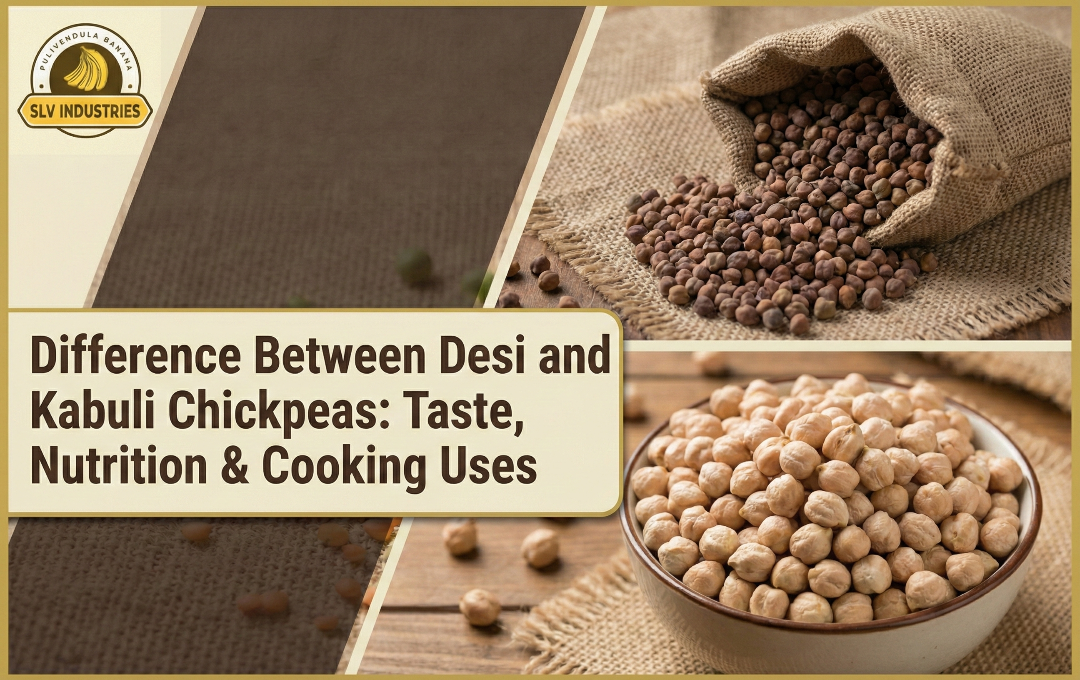
You’re in the middle of grocery shopping, casually picking up staples, when something unexpected catches your eye — two very different-looking chickpeas. One is small, dark, and rugged. The other is big, pale, and smooth. Both labeled simply as “chickpeas.” Naturally, a question arises: Do they actually cook, taste, and nourish differently — or is it just appearance?
This curiosity reflects a broader shift happening worldwide. Chickpeas have transformed from a basic pantry essential into a global nutrition phenomenon. Once mainly associated with traditional dishes, they now power plant-based diets, gluten-free cooking, and protein-rich meal planning. The global chickpea market is valued at approximately USD 16 billion in 2024, growing steadily at 7.1% CAGR, fueled by rising health awareness, sustainable eating, and the demand for affordable plant protein.
Understanding the difference between desi and kabuli chickpeas is no longer a niche curiosity — it’s a practical decision affecting flavor, cooking behavior, digestion, nutrition, and long-term health.
This guide blends food science, real kitchen experience, and global consumption insights to help you make smarter choices — whether you cook traditionally, experiment globally, or prioritize nutrition.
Chickpeas (Cicer arietinum L.) are among the earliest cultivated crops, domesticated nearly 10,000 years ago in the Fertile Crescent, a region stretching across modern-day Turkey, Syria, and Iraq. Over centuries, environmental adaptation and human cultivation created two distinct evolutionary paths:
Desi chickpeas — the older, more primitive type, originating in South Asia and adapted to dry, harsh climates.
Kabuli chickpeas — the newer, refined type, developed in Mediterranean and West Asian regions and later spread globally through trade.
Desi chickpeas feel traditional, rustic, and resilient, while Kabuli chickpeas feel modern, standardized, and globally commercialized. These differences are not cosmetic — they reflect agricultural evolution shaped by geography, climate, and culinary culture.
India produces nearly 70% of the world’s chickpeas, primarily Desi, making it the backbone of global supply. Kabuli chickpeas dominate consumption in North America, Europe, Australia, and the Middle East due to their softer texture and versatility. The Asia-Pacific region holds 37% of the global chickpea market (USD 5.9B) — largely driven by Desi usage.
These two types are not rivals — they serve distinct culinary, nutritional, and agricultural roles, complementing each other in global food systems.
At first glance, the difference seems visual — but structure determines cooking performance, texture, and digestibility.
Desi chickpeas
Smaller, darker, angular
Thick, rough seed coat (~14%)
Kabuli chickpeas
Larger, cream-colored, round
Thin, smooth seed coat (~5%)
The seed coat thickness alone dramatically influences soaking time, texture, fiber content, and flavor absorption.
Desi chickpeas absorb spices deeply and retain firmness even after cooking, making them ideal for slow, spice-heavy dishes. Kabuli chickpeas hydrate quickly, cook softer, and blend smoothly.
Food science insight:
More seed coat → more fiber + firmer bite + slower digestion
Thinner coat → smoother texture + quicker cooking + lighter mouthfeel
Across chickpea varieties, including comparisons like kala chana vs garbanzo beans, the chickpea size and texture difference plays a crucial role in culinary outcomes.
Taste defines emotional connection with food.
Desi chickpeas deliver a deeper, earthy flavor with mild nuttiness and subtle bitterness. When cooked whole, they remain firm and chewy, giving a satisfying bite.
Best suited for:
Spiced curries
Slow-cooked dishes
Roasted snacks
Desi feels flavor-rich, traditional, and hearty, often forming the backbone of rustic cooking traditions.
Kabuli chickpeas offer a buttery, slightly sweet taste with smooth texture, making them easy to blend and widely adaptable.
Best suited for:
Hummus
Salads
Soups and purees
Sensory studies consistently rate Kabuli as creamier, while Desi is perceived as more robust and intense.
Understanding desi vs kabuli chickpeas nutrition helps align dietary choices with health goals.
Both are rich in plant protein (~15g per cooked cup).
Desi: slightly higher protein (~25.4%)
Kabuli: higher carbohydrates (~55%) and fat (~5.1%)
Calories:
Desi ~327 kcal
Kabuli ~365 kcal
Desi chickpeas contain 3–4× more fiber, resulting in:
Lower glycemic index
Better blood sugar regulation
Improved gut microbiome support
Higher satiety
Desi often contains higher iron and calcium in certain cultivars. Both varieties have similar amino acid profiles, with methionine and cystine as limiting amino acids.
Soaking and sprouting enhance mineral absorption and reduce anti-nutrients — slightly more effective in Kabuli due to thinner seed coat.
Desi → metabolic health, fiber-rich, gut support
Kabuli → balanced energy, easier digestion, versatile nutrition
Cooking is where the real difference between Desi and Kabuli chickpeas becomes obvious. Their structure, starch composition, and seed coat thickness directly influence soaking, texture, flavor absorption, and final dish outcome. Understanding how each behaves in the kitchen helps avoid common cooking mistakes and unlocks their full culinary potential.
Desi chickpeas are deeply rooted in traditional cuisines, especially across South Asia and parts of the Middle East. Their strong structure and dense interior make them ideal for slow, layered cooking where flavor builds gradually.
Common Forms
Whole (Kala Chana): Dark, firm chickpeas used in hearty dishes
Split (Chana Dal): Dehulled and split version, cooks faster and gives creamy thickness
Flour (Besan): Finely ground, widely used in snacks, sweets, and gluten-free cooking
Typical Uses
Rich curries and gravies
Lentil-based dishes and dals
Savory snacks and roasted chickpeas
Traditional sweets and batters
Cooking Behavior
Desi chickpeas require patience but reward depth of flavor. Their thick seed coat slows water absorption, which is why soaking for 8–12 hours is essential. Even after soaking, they require longer cooking — but this slow cooking allows spices to penetrate deeply, resulting in a richer taste.
Their natural starch and fiber help thicken gravies without added thickeners, making them ideal for slow-simmer dishes. Importantly, they hold shape well, maintaining a firm bite even after extended cooking — a key reason they are preferred in traditional recipes where texture matters.
Texture Insight
Desi chickpeas feel hearty, dense, and satisfying — a defining trait in rustic and spice-forward cooking.
Kabuli chickpeas are widely used in Mediterranean, European, and modern global cooking. Their smooth surface, lighter structure, and softer interior make them more adaptable and quicker to prepare.
Common Forms
Dried whole chickpeas
Pre-cooked or canned chickpeas
Cooked and frozen variants
Typical Uses
Creamy hummus and dips
Fresh salads and grain bowls
Light soups and stews
Pilafs and rice dishes
Roasted or baked snacks
Cooking Advantages
Kabuli chickpeas hydrate faster and cook more quickly due to their thinner seed coat. Once cooked, they become soft, smooth, and creamy, making them ideal for blending and lighter dishes.
Their uniform size and pale color also offer better visual appeal, which is why they are widely used in ready-to-eat meals, processed foods, and modern culinary presentations.
Texture Insight
Kabuli chickpeas feel smooth, soft, and delicate — perfect for dishes where creaminess and consistency matter.
The choice between Desi and Kabuli chickpeas often comes down to cooking style and desired texture:
Desi → best for long-simmer, spice-rich, flavor-heavy cooking
Kabuli → best for quick meals, blending, and smooth textures
Using the right chickpea for the right dish dramatically improves flavor, mouthfeel, and cooking efficiency.
Choosing between the two isn’t about which is “better” — it’s about matching the chickpea to your culinary and nutritional needs.
Choose Desi if you want:
Traditional, slow-cooked dishes
High fiber and lower glycemic impact
Stronger, earthier flavor
Firmer texture and better shape retention
Choose Kabuli if you want:
Creamy, smooth texture
Faster cooking and convenience
Global or Mediterranean recipes
Mild flavor and easy blending
Quality and Storage Indicators
Regardless of type, quality matters significantly. Look for:
Uniform size and color
Intact seed coat without cracks
Clean, fresh aroma
Minimal broken pieces
Store chickpeas in airtight containers in a cool, dry place. For best flavor and cooking performance, use within 12–24 months. Testing a small batch before bulk cooking helps confirm quality and cooking time.
Chickpeas are no longer just traditional staples — they are now part of the global health and sustainability movement. The chickpea market, valued at around USD 16 billion in 2024, continues to expand due to three major drivers:
Rising vegan and plant-based diets
Increasing demand for affordable protein
Growing health and wellness awareness
India dominates global Desi chickpea production, supplying a major share to domestic and international markets. Meanwhile, global Kabuli production — estimated at 2.9–3 million tonnes annually — continues to grow due to increasing demand in Western and Middle Eastern markets.
Export trends show strong momentum across both varieties, with chickpeas becoming a key commodity in global agricultural trade.
Chickpea flour (besan) gaining traction in gluten-free foods
Kabuli dominating hummus, ready-to-eat, and processed foods
Chickpea protein isolates growing 8–10% annually
Increasing demand for organic and traceable sourcing
Sustainability Insight
Kabuli chickpeas often show lower environmental footprint per kilogram, while Desi chickpeas deliver higher nutrient density per gram, making both valuable in sustainable nutrition systems.
Chickpeas contribute far beyond nutrition. As legumes, they fix nitrogen in soil, improving fertility and reducing the need for synthetic fertilizers — a key advantage in sustainable agriculture.
Desi chickpeas are crucial for smallholder farmers in drought-prone regions, providing resilient crops and stable income. Kabuli chickpeas, on the other hand, drive innovation in global food industries — from plant-based protein to functional foods.
With growing global population and nutrition demands, chickpeas are shifting from a basic staple to a strategic superfood, valued for protein, fiber, sustainability, and versatility.
Even experienced cooks sometimes overlook important differences between Desi and Kabuli chickpeas.
Using Kabuli for thick curries
Kabuli becomes too soft and doesn’t provide the same texture or natural thickening as Desi.
Ignoring soaking differences
Desi requires longer soaking; skipping this step leads to uneven cooking and tougher texture.
Assuming identical nutrition
Desi has significantly higher fiber and lower glycemic impact — a key health distinction.
Overlooking fiber and glycemic index
Choosing chickpeas without considering digestion and blood sugar response can affect dietary outcomes.
Understanding these differences helps ensure better cooking results, improved nutrition, and smarter ingredient selection.
Desi and Kabuli chickpeas are not competitors — they are complementary ingredients, each offering distinct strengths. Desi chickpeas bring fiber density, earthy flavor, and resilience, making them ideal for traditional, slow-cooked, nutrition-focused meals. Kabuli chickpeas offer smooth texture, versatility, and global culinary adaptability, perfect for modern cooking and convenience-driven diets.
Choosing between them ultimately depends on your taste preference, cooking style, and nutritional priorities. Some meals call for the depth and firmness of Desi, while others benefit from the creaminess and ease of Kabuli. Understanding these differences allows you to use chickpeas more intentionally — not just as a staple, but as a strategic ingredient for both health and flavor.
As chickpeas continue to gain importance in global food systems, the role of reliable sourcing and consistent quality becomes increasingly significant. From farm-level cultivation to export-ready processing, maintaining purity, uniformity, and nutritional integrity ensures chickpeas perform as expected across different cuisines and applications. Established agricultural exporters like SLV Industries, with integrated farmer networks and controlled supply chains, contribute to this consistency by delivering well-processed Desi and Kabuli chickpeas suited for diverse global needs — quietly supporting the journey from soil to table.
In the end, the next time you see two types of chickpeas side by side, you’ll recognize more than just a visual difference. You’ll see two purposeful ingredients, each with its own role in nutrition, sustainability, and the evolving story of food.
Adding a small pinch of baking soda during soaking can help soften the seed coat and reduce cooking time, especially for older chickpeas. However, excessive use may slightly affect flavor and nutrient stability, so it should be used sparingly.
Dried chickpeas generally retain a firmer texture and more natural flavor, making them ideal for traditional cooking. Canned chickpeas are convenient and time-saving but may contain added sodium and slightly softer texture due to pre-cooking.
Chickpeas contain complex carbohydrates that can cause gas in some people. Proper soaking, rinsing, thorough cooking, and even sprouting can significantly reduce digestive discomfort and improve nutrient absorption.
Chickpeas are rich in plant protein but not fully complete, as they are slightly low in certain amino acids like methionine. Pairing chickpeas with grains such as rice or wheat creates a more balanced amino acid profile.
Yes. Sprouting enhances vitamin content, improves mineral bioavailability, and reduces anti-nutrients. It also makes chickpeas easier to digest and slightly lowers cooking time.
Good-quality chickpeas have uniform size, natural color, low moisture, and minimal broken grains. They should feel firm, smell clean, and cook evenly without excessive splitting or mushiness. Proper grading and storage conditions often indicate better quality.


Lorem ipsum dolor sit amet, consectetur adipiscing elit. Nunc quis ultrices lectus lobortis, dolor et tempus porta, leo mi efficitur ante, in varius felis sem ut mauris. Proin volutpat lorem inorci sed vestibulum tempus. Lorem ipsum dolor sit amet, consectetur adipiscing elit. Aliquam hendrerit.


Received 10% Discount on Your Next Purchase!
By submitting your email you will accept our privacy policy.