How to Import G9 Banana from India – Step-by-Step Guide for Buyers
Mar 02, 2026
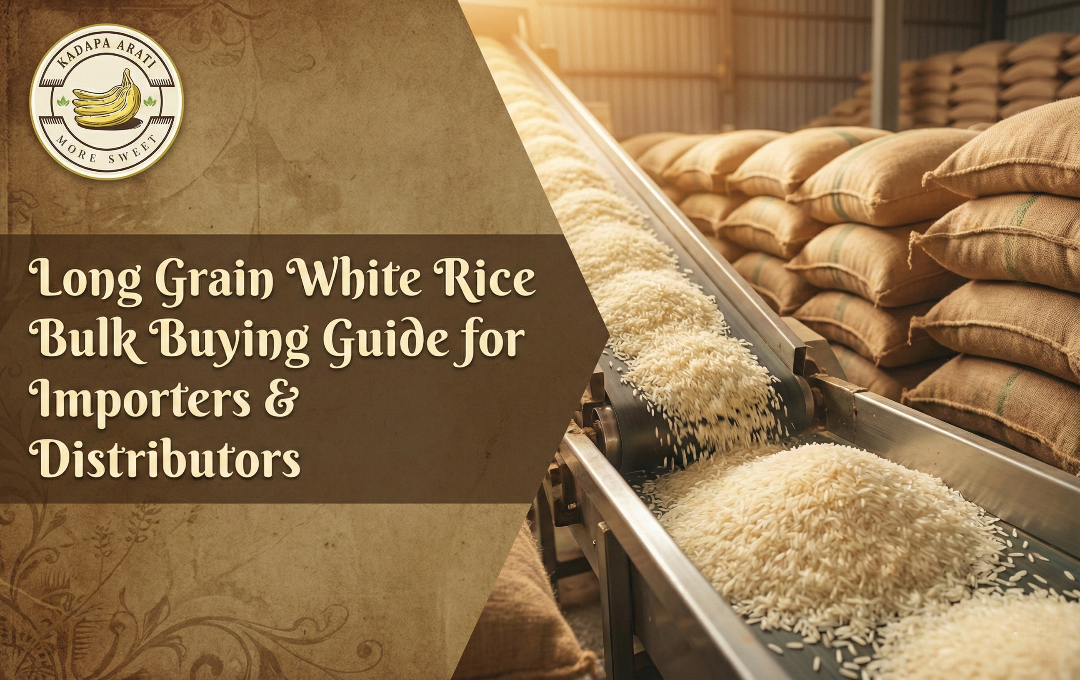
For importers and distributors, sourcing long grain white rice in bulk is a business-critical decision. The quality of rice you import, the reliability of your supplier, and the consistency of shipments directly affect your downstream customers, pricing stability, and brand credibility.
In global trade, long grain white rice is not purchased casually. Buyers evaluate grain quality, milling standards, moisture levels, packaging strength, export documentation, and supplier reliability long before placing a bulk order. A mistake at the sourcing stage can result in rejected shipments, storage losses, or strained buyer relationships.
This comprehensive guide is written specifically for importers, distributors, and wholesale buyers who want to source long grain white rice wholesale with confidence and build a sustainable supply chain.
Long grain white rice is among the most widely consumed and traded rice varieties worldwide. Characterized by its long, slender grains and non-sticky texture after cooking, it is preferred across Asian, Middle Eastern, African, European, and American markets.
In wholesale trade, long grain white rice is commonly used for:
Retail resale under private or national brands
Hotels, restaurants, and catering (HORECA) supply
Food manufacturers producing ready meals, rice mixes, and packaged foods
Government and institutional procurement programs
Because this rice serves multiple commercial applications, consistency is non-negotiable. Importers expect uniform grain length, predictable cooking performance, and stable quality across repeated bulk shipments.
Buying long grain white rice bulk is not just about volume—it is about control, reliability, and cost efficiency.
Bulk purchasing reduces per-unit costs significantly compared to retail or small-lot sourcing. This allows distributors to maintain competitive pricing while protecting margins.
Bulk contracts help buyers avoid shortages caused by seasonal demand spikes, logistics disruptions, or market volatility.
Wholesale buyers can define grain length, broken percentage, moisture content, and packaging standards instead of accepting generic retail specifications.
Bulk sourcing allows distributors to scale operations smoothly as demand grows without repeatedly onboarding new suppliers.
For serious importers, bulk sourcing becomes a long-term procurement strategy, not a one-time transaction.
Quality evaluation is the foundation of any successful long grain white rice wholesale purchase. Importers should carefully assess the following parameters before approving a bulk order.
Uniform long grains improve product appearance and cooking consistency. Inconsistent grain size often signals poor milling or blending.
Broken grains affect cooking results and market value. Wholesale buyers typically specify acceptable limits based on end use.
High moisture increases the risk of spoilage, mold growth, and reduced shelf life during transit or storage.
Export-grade rice must be free from stones, husk, dust, insects, and foreign matter. Clean processing indicates disciplined milling practices.
Buyers should always test samples to evaluate texture, aroma, and yield after cooking, especially for foodservice and manufacturing use.
A professional bulk supplier will provide clear specifications, samples, and transparency before shipment.
Packaging plays a critical role in protecting rice quality during transport and storage.
25 kg woven polypropylene (PP) bags
50 kg woven polypropylene (PP) bags
Inner polyethylene liners for moisture protection
Custom printed bags for distributor or private-label branding
Strong packaging prevents contamination, moisture ingress, and handling damage during long transit periods.
Most long grain white rice wholesale suppliers operate with:
Container-based shipments
Multi-tonne minimum orders
Flexible MOQs for long-term or repeat buyers
Clear discussions on packaging and MOQ at the quotation stage prevent operational delays later.
Incorrect or missing documentation can delay shipments and increase costs. Importers should ensure their supplier supports all required export documents, including:
Commercial Invoice
Packing List
Certificate of Origin
Phytosanitary Certificate
Bill of Lading
Destination-specific compliance documents
Experienced exporters handle documentation accurately, helping buyers avoid customs holds and penalties.
Efficient logistics are as important as rice quality in wholesale trade.
Bulk rice is typically shipped in full containers. Container selection depends on order volume and packaging type.
Transit duration varies by origin, destination, and port congestion. Buyers should factor processing and packing lead time into planning.
Common Incoterms include FOB, CFR, and CIF. Buyers should clearly define responsibility for freight, insurance, and inland handling.
Proper container loading, moisture control, and fumigation procedures reduce the risk of damage or contamination during transit.
Once imported, proper storage preserves rice quality and resale value.
Store in dry, well-ventilated warehouses
Avoid exposure to moisture and direct heat
Implement pest control and hygiene protocols
Follow FIFO (First In, First Out) inventory rotation
When stored correctly, long grain white rice maintains quality for extended periods, making it suitable for wholesale distribution.
Supplier selection determines the success or failure of bulk sourcing.
Proven experience in bulk and export markets
Ability to maintain consistent quality across shipments
Transparent product specifications
Sample availability before bulk dispatch
Reliable packaging and logistics coordination
Professional communication and after-sales support
A dependable supplier focuses on long-term partnerships, not short-term sales.
Wholesale pricing is influenced by several variables:
Rice variety and grade
Milling quality and broken percentage
Packaging type and customization
Order volume and contract length
Freight terms and destination
Market supply and seasonal demand
Importers should evaluate total landed cost, not just headline pricing.
Common payment structures in bulk rice trade include:
Advance payment with balance against documents
Letter of Credit (L/C) for large shipments
Contract pricing for repeat buyers
Clear payment terms protect both buyer and supplier and support smoother trade relationships.
Many buyers encounter issues due to:
Skipping sample testing
Ignoring moisture or broken specifications
Selecting suppliers solely based on price
Overlooking packaging quality
Failing to confirm documentation requirements
Avoiding these mistakes leads to more predictable sourcing outcomes.
For distributors, reliability is more valuable than short-term cost savings. Consistent bulk sourcing helps:
Maintain stable resale pricing
Fulfill customer contracts on time
Protect brand reputation
Build long-term customer trust
A trusted long grain white rice wholesale supplier becomes a strategic growth partner.
SLV Industries supports importers and distributors seeking dependable long grain white rice bulk supply for domestic and international markets.
Buyers choose SLV Industries for:
Export-grade quality control
Consistent bulk availability
Flexible packaging solutions
Transparent specifications
Reliable logistics and documentation support
SLV Industries focuses on building long-term wholesale relationships, helping buyers source rice with confidence and continuity.
If you are an importer or distributor looking for long grain white rice in bulk, choosing the right supplier makes all the difference.
Partner with SLV Industries to:
Request bulk pricing and MOQ details
Receive product specifications and samples
Discuss packaging, shipping, and export documentation
Secure a consistent long grain white rice wholesale supply
👉 Contact SLV Industries today to request a quotation or sample and build a reliable bulk rice sourcing partnership.



Lorem ipsum dolor sit amet, consectetur adipiscing elit. Nunc quis ultrices lectus lobortis, dolor et tempus porta, leo mi efficitur ante, in varius felis sem ut mauris. Proin volutpat lorem inorci sed vestibulum tempus. Lorem ipsum dolor sit amet, consectetur adipiscing elit. Aliquam hendrerit.


Received 10% Discount on Your Next Purchase!
By submitting your email you will accept our privacy policy.