How to Import G9 Banana from India – Step-by-Step Guide for Buyers
Mar 02, 2026
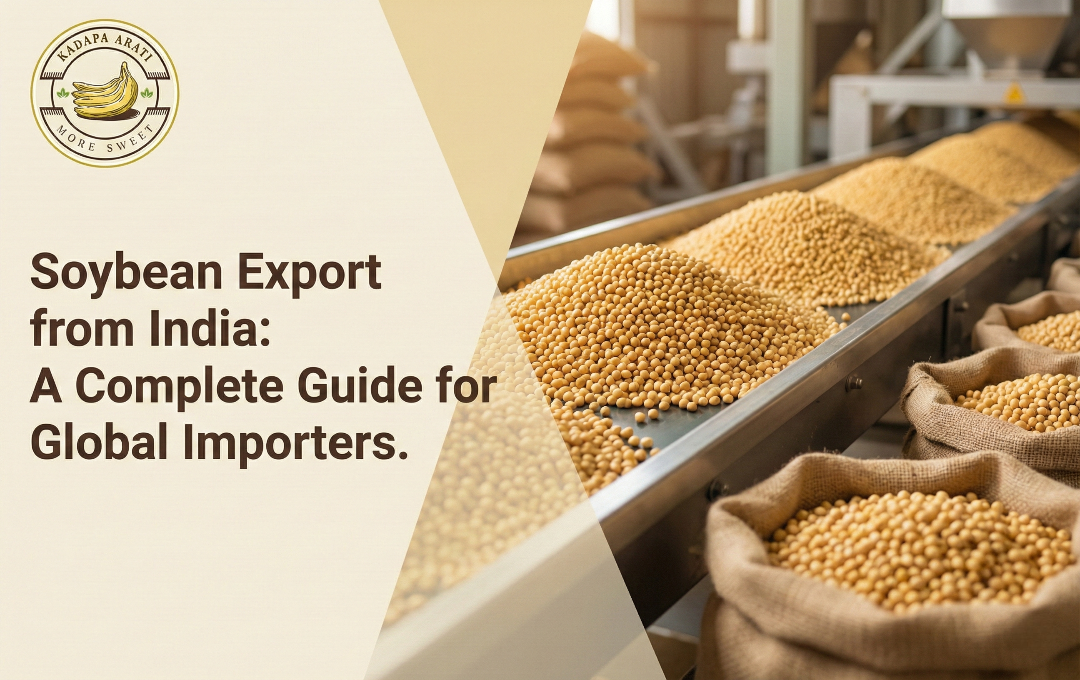
India has emerged as a reliable sourcing destination for agricultural commodities, and soybeans are no exception. With growing global demand from food processors, animal feed manufacturers, and oil extraction companies, soybean export from India has gained strong momentum. For international buyers, understanding where to buy soybeans in bulk, how to evaluate soybean suppliers, and what to expect from the export process is essential for long-term, risk-free sourcing.
This guide is designed for global importers looking to source soybeans from India, offering practical insights into production, quality standards, supplier selection, and export logistics—while helping you make informed procurement decisions.
India is among the world’s leading soybean producers, with cultivation spread across several agrarian states. Indian soybeans are primarily non-GMO, making them suitable for markets where GMO restrictions apply. This natural advantage has positioned India as a preferred exporter for buyers seeking traceable and responsibly sourced soybeans.
Soybean export from India serves multiple end-use industries, including:
Edible oil manufacturing
Poultry and cattle feed
Food processing and soy-based products
Industrial applications
Exports are handled by experienced soybean suppliers and exporters who manage sourcing directly from farming clusters and ensure export-ready compliance.
Understanding production regions helps buyers assess consistency and availability. The majority of Indian soybeans are grown in:
Madhya Pradesh – The largest soybean-producing state, known for consistent volumes and stable quality
Maharashtra – Strong in both cultivation and processing infrastructure
Rajasthan – Emerging supplier with increasing acreage
These regions benefit from favorable agro-climatic conditions, enabling large-scale production suitable for bulk exports.
For global buyers, quality assurance is a critical factor when sourcing soybeans in bulk. Indian soybean suppliers typically offer export-grade soybeans that meet international trade requirements.
Common quality parameters include:
Moisture content (generally below 12%)
Foreign matter limits
Uniform grain size
Natural color and low damaged kernels
Depending on the importing country, soybeans may be supplied with laboratory test reports, phytosanitary certification, and third-party inspection documents. Reliable exporters ensure that quality specifications are clearly communicated before shipment.
One of the most frequent questions from importers is where to buy soybeans in bulk without compromising on quality or reliability. The most dependable sourcing options include:
Direct Exporters and Suppliers – Companies that manage procurement, processing, and export under one roof
Agricultural Trading Companies – Firms with established supplier networks and export experience
Contract-Based Suppliers – Long-term supply partners offering volume consistency and price stability
Working directly with experienced soybean suppliers in India helps buyers avoid unnecessary intermediaries, maintain transparency, and ensure timely execution of bulk orders.
Selecting the right supplier plays a decisive role in successful imports. When evaluating soybean suppliers in India, global buyers should consider:
Export experience and track record
Access to farming and aggregation networks
Ability to meet bulk volume requirements
Compliance with international quality and documentation standards
Clear communication and contract transparency
Suppliers that focus on long-term trade relationships often provide better consistency, flexible packaging options, and reliable shipment timelines.
The soybean export from India follows a structured process designed to meet international trade norms. Typically, the process includes:
Bulk procurement from producing regions
Cleaning, grading, and quality checks
Packaging as per buyer requirements (bags or bulk)
Export documentation preparation
Port handling and shipment
Key documents involved in soybean exports include:
Commercial invoice
Packing list
Certificate of origin
Phytosanitary certificate
Bill of lading
Experienced exporters manage these formalities to ensure smooth customs clearance at both origin and destination ports.
Soybeans for export are commonly packed in:
25 kg or 50 kg PP bags
Jumbo bags for large shipments
Bulk containerized shipments
Minimum order quantities (MOQ) vary depending on supplier capability and destination market, but most soybean suppliers focus on container-load volumes to maintain export efficiency.
India’s well-developed port infrastructure supports soybean exports through major ports such as Nhava Sheva, Mundra, and Chennai, enabling access to markets across Asia, the Middle East, Africa, and Europe.
Indian soybeans are exported to a wide range of international markets, including:
Demand is driven by both food-grade and feed-grade applications, making India a versatile sourcing destination for different buyer segments.
For importers, consistency matters more than one-time pricing. Working with established exporters helps reduce supply risks, improve planning, and maintain quality stability across shipments.
Companies like SLV Industries operate with a sourcing-focused approach, supporting global buyers through reliable procurement, quality control, and export-ready supply. Rather than transactional selling, such exporters prioritize sustainable partnerships built on transparency and performance.
India’s strengths in soybean export include:
Large non-GMO production base
Competitive pricing for bulk buyers
Skilled agricultural supply chains
Growing focus on export compliance
For importers seeking dependable suppliers and scalable sourcing options, soybean export from India continues to be a strategic choice.
Sourcing soybeans in bulk requires more than just competitive pricing—it demands reliable suppliers, clear quality standards, and smooth export execution. By understanding the Indian soybean export ecosystem and working with experienced partners, global buyers can secure consistent supply and long-term value.
Whether you are exploring new sourcing regions or expanding existing procurement channels, India offers a strong foundation for bulk soybean imports backed by capable exporters and structured supply chains. Connect with us to learn more!


Lorem ipsum dolor sit amet, consectetur adipiscing elit. Nunc quis ultrices lectus lobortis, dolor et tempus porta, leo mi efficitur ante, in varius felis sem ut mauris. Proin volutpat lorem inorci sed vestibulum tempus. Lorem ipsum dolor sit amet, consectetur adipiscing elit. Aliquam hendrerit.


Received 10% Discount on Your Next Purchase!
By submitting your email you will accept our privacy policy.