How to Import G9 Banana from India – Step-by-Step Guide for Buyers
Mar 02, 2026
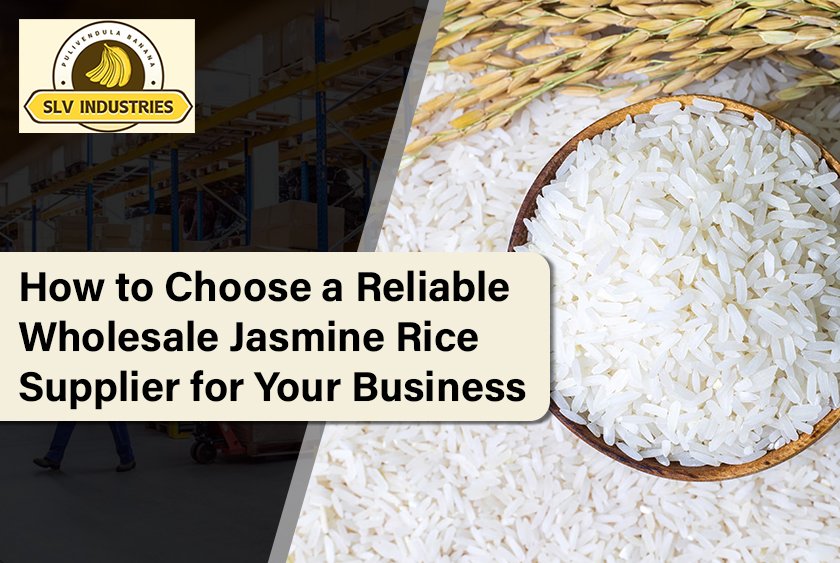
Sourcing wholesale jasmine rice or bulk jasmine rice is a commercial decision that affects cost, product quality, and customer satisfaction. For importers, distributors, and foodservice buyers, the right jasmine rice supplier must deliver consistent quality, timely shipments, and correct export documentation. This guide gives a practical, transaction-focused framework to evaluate suppliers and choose a partner you can rely on.
Jasmine rice is an aromatic, long-grain rice valued for its fragrance and cooking qualities. Unlike commodity-grade rice, jasmine commands premium pricing and higher buyer expectations. A dependable supplier reduces the risk of:
Quality disputes and returns
Shipment delays and inventory shortages
Non-compliance with food-safety or import rules
Unexpected cost overruns from incorrect freight or documentation
Because importers often operate on tight margins and schedules, due diligence up front saves time and money later.
Start with product specifics. Good suppliers will provide clear technical details and samples.
What to check:
Grain type and grade: long-grain, aromatic jasmine varieties.
Broken percentage: lower broken rates indicate higher-grade rice.
Moisture content: appropriate moisture (typically around 12–14%) is essential for shelf life and shipping.
Aroma and kernel appearance: consistent fragrance and uniform color/size.
Processing details: parboiled or raw, polishing level, and whether the rice is single-origin.
Request lab or inspection reports and obtain cooking samples. Evaluate aroma retention, elongation ratio after cooking, and texture to confirm the product matches your market expectations.
Cross-border buyers must be certain their supplier understands and meets regulatory requirements.
Essential documents and standards:
Phytosanitary certificate and certificate of origin
Fumigation or treatment certificates (when required)
HACCP or equivalent food-safety program evidence
ISO certifications for quality management where applicable
Third-party inspection reports (SGS, Bureau Veritas, etc.)
A professional jasmine rice supplier proactively produces these documents and explains which certificates are relevant to your destination country.
Exporting bulk rice requires knowledge of international trade terms, customs procedures, and market-specific requirements.
Questions to ask:
Which countries have you exported to previously?
What are your typical shipment sizes and lead times?
Do you handle documentation (commercial invoice, packing list, BL) and customs clearance?
Can you advise on local import rules (labelling, residue limits, testing)?
Experienced exporters minimize errors in documentation and reduce the chances of customs holds or rejected consignments.
A supplier’s ability to fulfill repeat or scaled orders is critical.
Evaluate:
Monthly/annual supply capacity and peak-season performance
Sourcing network — do they contract directly with mills or farmer groups?
Storage and inventory practices — proper warehouses, pest control, rotation
Suppliers with diversified sourcing and adequate storage are more resilient to crop variability and can meet contractual obligations reliably.
Price matters, but transparency matters more.
Make sure the supplier provides:
Clear price breakdowns (product price, packing, freight terms)
Defined trade terms (FOB, CIF, DAP) and what each includes
Payment terms and acceptable instruments (LC, TT)
Validity period for quotes and policies for price adjustments
Beware of very low bids without clear quality guarantees — they often translate to higher total landed cost through rejections, rework, or poor shelf life.
Packaging protects the product and influences buyer perception.
Common considerations:
Bag sizes (5 kg, 10 kg, 25 kg, 50 kg) and material (woven PP, laminated)
Moisture-resistant liners and inner sachets for oxygen/moisture control
Private-label printing, barcodes, and multilingual labelling for your market
Palletization standards for container loading
If you sell under your brand, check the supplier’s private-label capabilities and minimum order quantities for branded runs.
Bulk shipments require coordinated logistics.
Ask about:
Typical lead time from order confirmation to shipment (production + port readiness)
Container loading practices and stuffing supervision
Freight booking options and whether they can offer CIF/CFR pricing
Experience with your destination ports and local delivery partners
Reliable suppliers give realistic lead times and provide regular shipment updates.
Good communication avoids costly misunderstandings.
Positive indicators:
Prompt replies and a dedicated contact person for orders
Proactive updates on production, testing, and shipping milestones
Clear escalation procedures for product or transit issues
A supplier who treats communication as part of service is easier to work with over the long term.
Traceability helps manage recalls and ensures provenance for premium buyers.
Traceability features to request:
Batch codes and harvest or mill origin details
Traceable supply chain documentation from farm to port
QC checkpoints (pre-shipment inspection, moisture testing, microbiological reports)
Suppliers investing in traceability demonstrate commitment to quality and transparency.
Watch for warning signs:
Refusal to provide samples or test reports
Vague answers on certifications or export experience
Unusually low prices without clear explanation
No clear contract terms, shipment timelines, or payment structure
If something feels uncertain, insist on verified documentation and consider a small initial order as a trial.
Use this checklist when comparing suppliers:
Sample provided and lab-tested
Phytosanitary and fumigation certificates available
Export experience in your market(s)
Transparent FOB/CIF pricing and payment terms
Adequate monthly supply capacity
Private-label and packaging options supported
Realistic lead times and logistics support
Clear communication channels and single point of contact
Traceability and batch documentation
Positive references or third-party inspection reports
India is a major rice exporter with developed milling infrastructure and competitive supply chains for aromatic rice varieties. Buyers sourcing bulk jasmine rice from India often benefit from cost competitiveness, established logistics, and a wide range of packaging options. When evaluating suppliers in India, the same criteria above apply: quality, compliance, capacity, and documentation.
Request samples and test them in your conditions.
Ask for specific export documents and third-party inspection reports.
Get firm quotations with trade terms and delivery timelines.
Negotiate a pilot order and include quality acceptance criteria.
Scale only after successful pilot shipment and satisfactory feedback.
If you are ready to request quotes or samples, consider contacting a supplier experienced in international jasmine rice trade. SLV Industries supplies export-ready bulk jasmine rice, flexible packaging options, and full support with documentation and logistics. To discuss your requirements or receive a quotation, visit the Contact Us page to connect directly with their team.


Lorem ipsum dolor sit amet, consectetur adipiscing elit. Nunc quis ultrices lectus lobortis, dolor et tempus porta, leo mi efficitur ante, in varius felis sem ut mauris. Proin volutpat lorem inorci sed vestibulum tempus. Lorem ipsum dolor sit amet, consectetur adipiscing elit. Aliquam hendrerit.


Received 10% Discount on Your Next Purchase!
By submitting your email you will accept our privacy policy.