How to Import G9 Banana from India – Step-by-Step Guide for Buyers
Mar 02, 2026
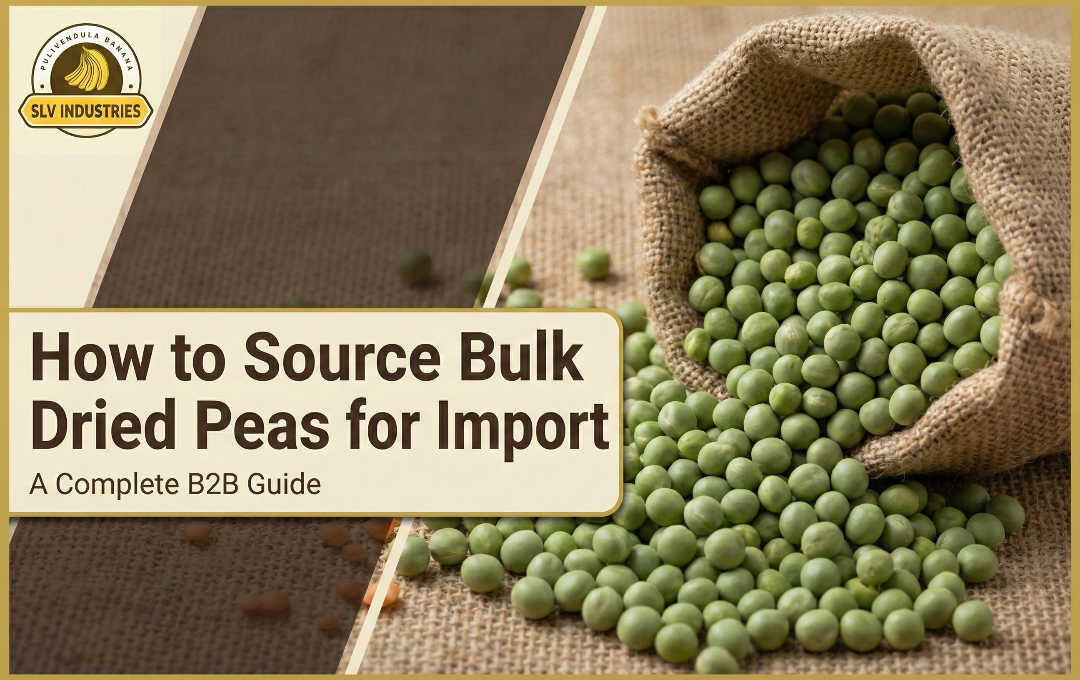
Global demand for dried pulses has grown steadily as food manufacturers, retail chains, and ingredient processors increasingly rely on shelf-stable, plant-based commodities. Among these, dried peas, particularly yellow and green varieties, play a vital role in packaged foods, protein formulations, ready-to-cook products, and institutional food supply chains.
For importers and distributors, sourcing bulk dried peas is not simply a price-driven transaction. Product consistency, regulatory compliance, and supply reliability directly impact downstream operations, brand reputation, and cost efficiency. Selecting the right dried peas supplier requires a structured evaluation that goes beyond basic specifications.
Importers who rely on underqualified suppliers often face risks such as shipment rejections, inconsistent grading, moisture-related spoilage, or supply disruptions tied to seasonal variability. A disciplined sourcing strategy helps mitigate these risks and ensures long-term procurement stability.
This guide outlines the key considerations procurement teams should apply when evaluating suppliers of wholesale dried peas for international trade.
Dried peas are widely traded across global agricultural markets and are available in several commercially relevant forms:
Yellow whole peas
Green whole peas
Split peas (yellow or green)
Each variety serves different end-use applications, including:
Food processing (soups, snacks, protein isolates)
Retail packaging for consumer markets
Industrial ingredient manufacturing
Export-quality dried peas must meet strict standards for cleanliness, uniformity, and food safety. Buyers typically expect:
Low moisture content for extended shelf life
Minimal foreign matter
Consistent color and size grading
Absence of infestation
Dried peas offer long storage stability when handled correctly. However, their shelf life depends on
Controlled humidity during storage
Protection from moisture ingress
Proper ventilation and pest management
Bulk shipments must be packaged to maintain product integrity throughout transit.
Procurement teams that implement formal supplier evaluation frameworks reduce long-term operational risk.
Inconsistent raw material quality can affect finished product texture, processing yields, and consumer acceptance. Manufacturers relying on dried peas for ingredient formulations must ensure uniform specifications across shipments.
Pulse imports are subject to inspection, phytosanitary certification, and contamination checks. Documentation errors or quality non-compliance can lead to shipment delays or rejection at destination ports.
Short-term savings from low-cost suppliers often result in:
Increased testing and reprocessing costs
Supply interruptions
Loss of shelf availability
A structured sourcing approach prioritizes supply chain stability and predictable total cost of ownership.
Understanding the geographic origin is essential. Growing conditions influence:
Crop quality
Seasonal availability
Yield consistency
Suppliers should provide transparency regarding sourcing regions, harvest cycles, and agricultural practices. Traceable supply chains improve risk management and facilitate regulatory compliance.
Modern processing infrastructure significantly improves product reliability. Importers should assess whether the supplier uses:
Gravity separators
Color sorting systems
Destoners
Advanced grading equipment
These technologies reduce foreign matter, improve uniformity, and ensure export-grade quality.
Hygiene controls during handling and storage are equally important to prevent contamination or infestation.
Before confirming any contract, buyers should request detailed quality specifications, including:
Moisture percentage
Broken or split ratio
Foreign matter limits
Size and grading standards
Color uniformity
Inspection reports and laboratory testing documentation help validate supplier claims and reduce post-shipment disputes.
A reputable dried peas supplier should maintain recognized food safety and quality certifications, such as:
HACCP implementation
ISO-compliant quality management systems
Phytosanitary certification
Export inspection approvals
Certification does not replace product testing but indicates structured operational processes and risk controls.
Different markets require different packaging formats, including:
25 kg or 50 kg polypropylene bags
Jumbo bulk bags
Containerized bulk shipments
Packaging must protect against moisture ingress and meet labeling requirements of the destination country.
Importers should evaluate whether the supplier can support:
Repeat large-volume orders
Seasonal demand fluctuations
Long-term contracts
Scalability is particularly critical for distributors supplying multiple markets or private-label retail chains.
Traceability supports both quality assurance and regulatory compliance. Reliable exporters should provide:
Batch identification
Origin documentation
Quality test certificates
Accurate shipping documentation
Strong documentation practices reduce customs clearance delays.
Pricing for wholesale dried peas typically varies based on multiple operational factors.
Country of origin
Crop quality and grading
Cleaning and processing level
Packaging format
Order volume
Buyers should assess total landed cost rather than ex-works pricing alone.
Extremely low-priced offers may indicate:
Poor cleaning standards
Inconsistent grading
Higher rejection risk
Long-term sourcing strategies prioritize consistency and predictable pricing rather than opportunistic spot purchases.
Price stability supports better forecasting and margin planning for distributors and manufacturers.
An experienced exporter plays a crucial role in ensuring seamless international trade.
Suppliers must understand import regulations across different markets, including:
Phytosanitary requirements
Residue and contamination standards
Documentation protocols
Failure to comply can lead to delays or shipment rejection.
Proper loading procedures help prevent transit damage. Key considerations include:
Moisture barriers
Clean container usage
Appropriate stacking methods
These practices maintain product quality during long shipping routes.
Reliable exporters provide:
Transparent production schedules
Accurate delivery timelines
Contingency planning for port congestion
Efficient logistics coordination minimizes supply disruptions.
Differences between batches can disrupt manufacturing processes. Suppliers with standardized grading and testing protocols reduce variability.
Improper storage or packaging during transit can cause mold growth or product degradation. Preventive packaging and container management are essential.
Incorrect paperwork can result in customs holds. Experienced exporters maintain robust documentation controls.
Weather conditions, harvest variability, or logistics bottlenecks can interrupt supply. Established suppliers typically maintain diversified sourcing networks to ensure continuity.
Reliable wholesale dried peas partners proactively address these risks through process discipline and transparent communication.
Transactional commodity trading often focuses on immediate price advantages. However, strategic sourcing relationships provide measurable operational benefits.
Consistent quality specifications
Predictable delivery schedules
Improved cost forecasting
Collaborative demand planning
Open communication and shared forecasting enable both parties to manage inventory and logistics efficiently.
Export-oriented organizations with structured sourcing, quality controls, and documentation capabilities, such as those adopted by reliability-focused processors like SLV Industries, demonstrate how process-driven partnerships can strengthen importer supply chains without relying on short-term transactional decisions.
Sourcing bulk dried peas for international distribution requires careful supplier evaluation across multiple dimensions. Importers should prioritize:
Verified origin and traceability
Modern processing and cleaning standards
Documented quality parameters
Regulatory compliance readiness
Scalable production capacity
While pricing remains an important consideration, long-term procurement success depends on supplier reliability, documentation accuracy, and supply continuity.
By applying a structured checklist when selecting a dried peas supplier, importers and distributors can reduce operational risk, maintain product consistency, and build resilient sourcing partnerships. For importers seeking a dependable wholesale dried peas supplier with export-ready documentation, consistent quality controls, and scalable volumes, engaging with SLV Industries’ sourcing team is a practical next step toward securing a reliable long-term supply partnership.
For importers and distributors evaluating long-term sourcing options, working with a supplier that combines traceable sourcing, export-grade processing, and consistent shipment execution is critical.
SLV Industries supports international buyers with structured procurement processes, documented quality controls, and scalable supply capability for wholesale dried peas across multiple markets.
Next Steps for Buyers:
Request current specifications and quality parameters
Discuss available grades, packaging formats, and volumes
Evaluate shipment timelines and export documentation readiness
Explore long-term contract supply options
Contact SLV Industries sourcing team to review your requirements and receive a tailored bulk dried peas supply proposal aligned with your market standards and delivery schedules.
Importers typically source bulk dried peas from established agricultural exporters with strong processing infrastructure, traceable sourcing, and export experience. Evaluating supplier certifications, documentation accuracy, and logistics capability helps ensure consistent quality and dependable long-term supply.
Wholesale dried peas are commonly supplied in 25 kg or 50 kg polypropylene bags, jumbo bulk bags, or containerized shipments. Packaging must protect against moisture, maintain product integrity during transit, and comply with labeling regulations in destination markets.
Reliable exporters often maintain HACCP, ISO-based quality management systems, and valid phytosanitary documentation. These certifications indicate structured food safety practices and help facilitate smoother customs clearance and regulatory compliance across different importing regions.
When stored under low humidity and controlled temperature conditions, dried peas typically maintain quality for extended periods. Proper packaging, pest control, and moisture management are essential to prevent spoilage, discoloration, or infestation during storage and transit.
Yellow whole peas, green whole peas, and split peas are the most widely traded varieties. Each type serves different industrial and retail applications, including soups, snacks, plant-protein ingredients, and packaged consumer products across multiple global markets.
Suppliers use advanced cleaning, grading, and color-sorting equipment to remove foreign matter and ensure consistent size and color. Standardized processing helps importers maintain product specifications required for food manufacturing and retail packaging operations.
Excess moisture can lead to mold growth, spoilage, and shipment rejection. Reliable exporters monitor moisture levels during storage, use protective packaging, and ensure containers are dry before loading to maintain product stability throughout long shipping routes.
Common documentation includes commercial invoices, packing lists, bills of lading, phytosanitary certificates, certificates of origin, and quality inspection reports. Accurate paperwork helps avoid customs delays and ensures compliance with importing country regulations.
Importers should begin with sample testing, request third-party inspection reports, review supplier certifications, and evaluate past export performance. Gradually increasing order volumes after successful initial shipments reduces financial and operational risk.
Reliable supply depends on diversified sourcing regions, adequate storage infrastructure, strong logistics planning, and transparent communication between buyer and supplier. Strategic partnerships help manage seasonal variability and maintain consistent availability across international markets.

Lorem ipsum dolor sit amet, consectetur adipiscing elit. Nunc quis ultrices lectus lobortis, dolor et tempus porta, leo mi efficitur ante, in varius felis sem ut mauris. Proin volutpat lorem inorci sed vestibulum tempus. Lorem ipsum dolor sit amet, consectetur adipiscing elit. Aliquam hendrerit.


Received 10% Discount on Your Next Purchase!
By submitting your email you will accept our privacy policy.