How to Import G9 Banana from India – Step-by-Step Guide for Buyers
Mar 02, 2026
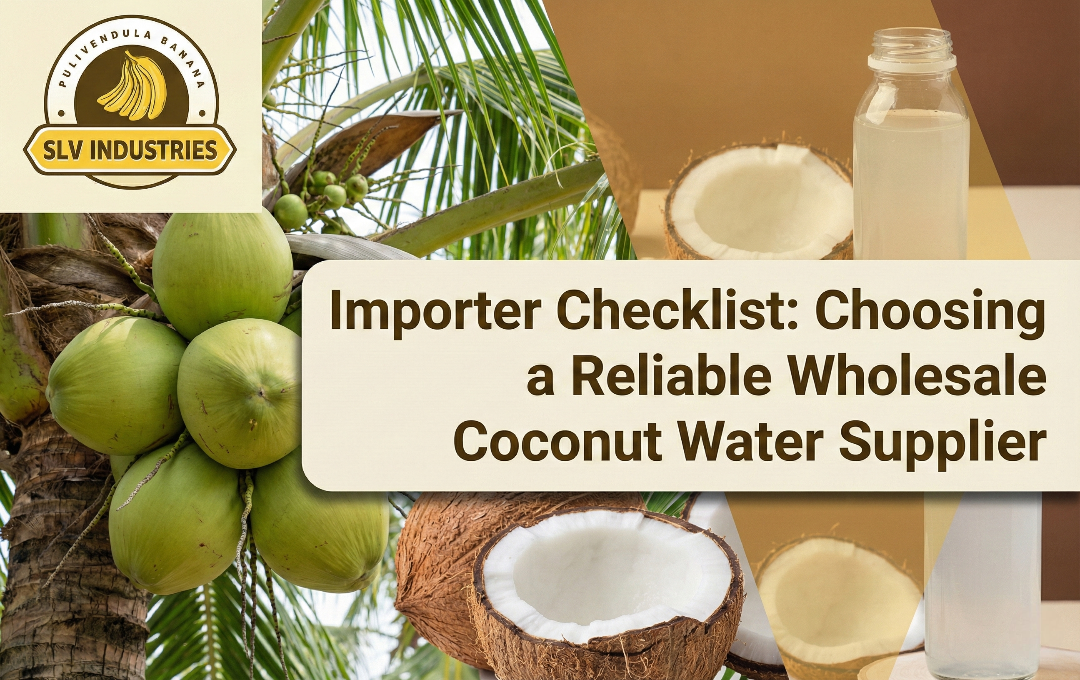
Over the last decade, coconut water has evolved from a niche health beverage into a globally traded, high-growth product category. Driven by demand for natural hydration, clean-label beverages, and functional drinks, coconut water now holds a permanent place on retail shelves, in foodservice channels, and across private-label portfolios worldwide.
For importers and distributors, however, growth brings complexity. As volumes scale and regulatory scrutiny increases, sourcing wholesale coconut water is no longer just about securing supply; it’s about ensuring consistency, safety, shelf stability. A single misstep in supplier selection can lead to quality disputes, regulatory delays, or reputational damage in highly competitive markets.
This is why experienced buyers rely on structured evaluation rather than ad hoc sourcing. This article provides a practical importer checklist to help businesses choose a reliable bulk coconut water supplier and long-term coconut water exporter, reducing risk while supporting scalable growth.
Before evaluating suppliers, importers must clearly understand what defines export-grade coconut water.
Export-quality coconut water is derived from young, green coconuts and processed under controlled conditions to preserve its natural electrolyte profile, taste, and clarity. Unlike raw or locally sold coconut water, export-grade products must meet strict microbiological, chemical, and labeling standards.
Natural (Minimally Processed):
Preserved using technologies such as UHT or aseptic processing to maintain flavor while extending shelf life.
Processed or Formulated:
May include filtration, blending, or standardization to ensure uniform taste, Brix level, and appearance across batches.
Both formats are widely traded, but the choice depends on market regulations, shelf-life requirements, and brand positioning.
Bulk coconut water is commonly supplied in:
Aseptic tetra packs
PET or glass bottles
Food-grade drums or totes for further processing
Shelf life typically ranges from 6 to 12 months, depending on processing and packaging.
Importers should be familiar with:
Brix level (natural sweetness consistency)
pH balance
Clarity and color
Microbiological safety
These parameters directly impact product stability and regulatory acceptance.
Sourcing coconut water at scale introduces risks that go beyond product taste.
Inconsistent quality or labeling errors can:
Lead to customer complaints
Trigger recalls
Damage private-label or retail brand trust
Different markets enforce different beverage standards. A supplier unfamiliar with destination requirements can expose importers to:
Shipment holds
Rejections at port
Costly relabeling or destruction
While low pricing may seem attractive initially, unreliable suppliers often create:
Higher wastage
Emergency sourcing costs
Supply disruptions during peak demand
A structured checklist allows buyers to evaluate suppliers on value, not just price.
Below is a practical checklist importers can use when assessing a bulk coconut water supplier.
Are coconuts sourced from consistent growing regions?
Is there control over maturity and harvesting practices?
Does the supplier have direct farmer relationships or long-term sourcing agreements?
Stable raw material sourcing is the foundation of consistent coconut water quality.
Is processing done in food-grade, certified facilities?
Are aseptic or UHT systems used to ensure shelf stability?
How is contamination risk controlled during extraction and filling?
Modern processing reduces spoilage risk and ensures batch uniformity.
Reliable suppliers monitor and document:
Brix levels
pH range
Microbial limits
Sensory consistency
Importers should request test reports and Certificates of Analysis (COA).
Export-ready suppliers typically hold:
FSSC 22000 or ISO 22000
HACCP
Organic certification (if applicable)
Certifications reflect systematic food safety management, not one-time compliance.
Many buyers require:
Custom packaging formats
Brand-specific labeling
Market-compliant nutritional panels
Suppliers with private-label experience reduce onboarding time for new markets.
A dependable wholesale coconut water partner should:
Handle current volumes comfortably
Scale production without compromising quality
Maintain inventory or planning buffers
Capacity constraints often surface only after contracts are signed—making early evaluation critical.
Transparent suppliers provide:
Batch-level traceability
Clear ingredient and origin documentation
Export-ready paperwork
Traceability is increasingly non-negotiable in regulated beverage markets.
Pricing for bulk coconut water varies widely and should be evaluated carefully.
Coconut origin and seasonality
Processing method and shelf-life technology
Packaging format
Order volume and contract duration
Ultra-low pricing often signals:
Weak quality controls
Shorter shelf life
Limited regulatory preparedness
Experienced importers prioritize predictable quality and delivery over short-term cost savings.
A supplier’s export experience is just as important as product quality.
Established exporters understand:
Country-specific beverage regulations
Documentation requirements
Labeling and claims restrictions
This knowledge minimizes clearance delays.
Export-ready suppliers ensure:
Food-grade, transit-safe packaging
Market-compliant labels
Proper palletization and container loading
Typical lead times depend on:
Order volume
Packaging format
Destination market
Reliable suppliers communicate timelines clearly and plan shipments proactively.
Solution: Standardized processing and quality benchmarks.
Solution: Proven preservation technology and proper packaging.
Solution: Market knowledge and compliant documentation.
Solution: Diversified sourcing and production planning.
Professional suppliers anticipate these issues rather than reacting after problems arise.
The most successful importers view sourcing as a partnership, not a transaction.
Transactional vendors focus on price and availability
Strategic partners focus on consistency, transparency, and growth alignment
Companies like SLV Industries reflect this strategic approach by prioritizing export readiness, quality systems, and long-term supply reliability, key factors for importers seeking stable market presence rather than short-term gains.
Choosing a reliable bulk coconut water supplier is a decision with long-term consequences. From quality consistency and regulatory compliance to supply continuity and brand protection, the right supplier directly impacts overall business performance.
By using a structured importer checklist and evaluating suppliers beyond pricing alone, buyers can reduce risk, strengthen operational stability, and build resilient supply chains. As global demand for coconut water continues to rise, partnering with experienced, export-focused suppliers becomes not just an advantage, but a necessity.
For importers focused on sustainable growth and dependable sourcing, disciplined supplier selection remains the strongest foundation for long-term success. Companies like SLV Industries support this approach by offering export-ready processes, quality-driven production, and reliable bulk supply solutions designed for international markets.
Importers looking for a dependable wholesale coconut water supplier can contact SLV Industries to discuss bulk requirements, specifications, and export support.
Importers should evaluate coconut water suppliers based on raw material sourcing, processing technology, food safety certifications, quality consistency, export experience, and documentation capabilities. A reliable bulk coconut water supplier must demonstrate scalability, traceability, and compliance with destination market regulations.
Most export markets require suppliers to follow recognized food safety standards such as FSSC 22000, ISO 22000, and HACCP. Depending on the destination, additional certifications like Organic, FDA registration, or country-specific approvals may also be required. Certified suppliers reduce regulatory and shipment risks for importers.
Shelf life generally ranges from 6 to 12 months, depending on the processing method (such as UHT or aseptic processing) and packaging format. Export-grade coconut water is designed to remain stable during long transit times while maintaining safety and quality.
Bulk coconut water can be supplied in aseptic tetra packs, PET bottles, glass bottles, or food-grade drums and totes for further processing. Packaging choice depends on the importer’s application, private-label requirements, and distribution channel.
Traceability allows importers to track each batch back to its source, processing date, and quality checks. This is critical for handling regulatory audits, quality claims, and recalls. Export-ready coconut water exporters provide batch-level documentation and transparent supply records.
Yes. Many importers and retailers prefer private-label coconut water to control branding and margins. Suppliers with private-label experience can support custom packaging, labeling, and compliance with market-specific nutritional and legal requirements, reducing time-to-market.


Lorem ipsum dolor sit amet, consectetur adipiscing elit. Nunc quis ultrices lectus lobortis, dolor et tempus porta, leo mi efficitur ante, in varius felis sem ut mauris. Proin volutpat lorem inorci sed vestibulum tempus. Lorem ipsum dolor sit amet, consectetur adipiscing elit. Aliquam hendrerit.


Received 10% Discount on Your Next Purchase!
By submitting your email you will accept our privacy policy.