How to Import G9 Banana from India – Step-by-Step Guide for Buyers
Mar 02, 2026
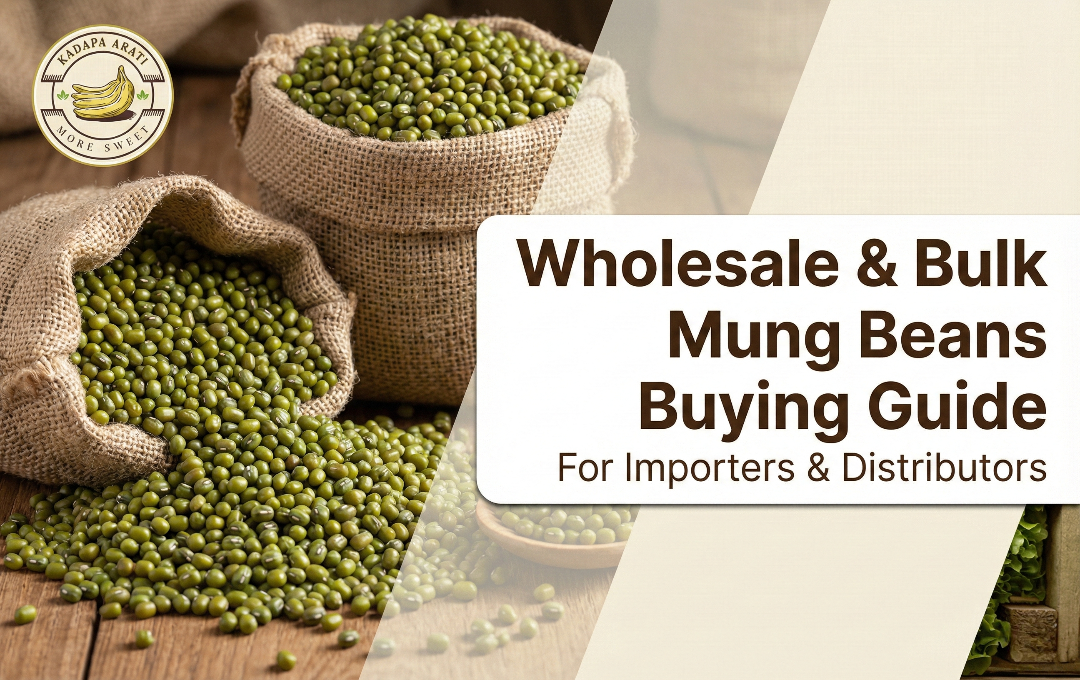
Sourcing high-quality bulk mung beans (also known as green gram or moong) at wholesale prices requires more than comparing quotes. Importers and distributors must evaluate quality specifications, grades, pricing factors, packaging options, export compliance, and supplier reliability before placing a bulk order. This buying guide explains everything you need to know when sourcing wholesale mung beans, helping you make informed purchasing decisions while reducing risk and improving supply consistency.
Mung beans are a widely traded pulse used in food manufacturing, retail packaging, sprouting, milling, and plant-based protein products. Due to their nutritional value, long shelf life, and global consumption, mung beans remain a stable commodity for international trade. Buying mung beans in bulk allows importers and distributors to reduce per-unit costs, maintain consistent stock levels, and improve margins across food service, retail, and processing channels.
While often used interchangeably, bulk mung beans typically refer to large-volume purchases measured in metric tons, whereas wholesale mung beans describe trade-level sourcing for resale or industrial use. Both involve high-volume procurement, standardized quality, and supplier reliability. Understanding this distinction helps buyers choose appropriate packaging, pricing structures, and logistics options for their business model.
Quality is the most critical factor when sourcing mung beans in bulk. Importers should verify the following specifications before confirming an order:
Grade and Size: Uniform size and higher grades command better prices and suit premium food applications.
Moisture Content: Ideally below 12% to prevent spoilage and extend shelf life.
Purity Level: Export-grade mung beans typically have 98% or higher purity.
Broken Percentage: Lower broken kernels are preferred for retail and sprouting purposes.
Color and Appearance: Bright green color indicates freshness and proper storage.
Germination Rate: Essential for buyers sourcing mung beans for sprouting applications.
Foreign Matter: Stones, dust, or mixed grains should be minimal and within acceptable export limits.
Always request a recent Certificate of Analysis (COA) that corresponds to the actual shipment lot.
Minimum order quantities (MOQs) for wholesale mung beans vary by supplier and shipment method. Common MOQs include:
LCL shipments: 5–10 metric tons
FCL shipments: 20–25 metric tons or more
Pricing depends on several factors such as crop quality, grade, moisture level, demand, packaging, and global freight rates. Most suppliers quote on an FOB or CIF basis. Buyers should request a detailed price breakdown covering product cost, packaging, handling, and delivery terms to avoid misunderstandings.
Proper packaging ensures product safety and quality during storage and transit. Common packaging options include:
25 kg or 50 kg woven polypropylene bags
Poly-lined bags for moisture protection
Jumbo bags for large-volume industrial buyers
Palletized loads for easier handling and reduced damage
Each bag should be clearly labeled with product name, net weight, origin, batch number, and packing date to meet export and customs requirements.
Exporting bulk mung beans requires adherence to international food safety and trade regulations. Key documents include:
Phytosanitary certificate
Certificate of Analysis
Fumigation or disinfestation certificate (if required)
Commercial invoice and packing list
Bill of lading
Country-specific import permits
Ensuring complete and accurate documentation reduces clearance delays and protects buyers from compliance issues.
Lead times depend on crop availability, order size, quality testing, and shipping schedules. Typically, bulk mung beans shipments are ready within 2–6 weeks from order confirmation. Buyers should factor in transit time, customs clearance, and inspection buffers when planning inventory.
A dependable supplier should offer:
Lot-specific quality reports
Transparent pricing and MOQs
Consistent supply capacity
Export experience to multiple markets
Support for third-party inspections
Clear communication and documentation
Working with an established exporter helps importers avoid quality disputes, shipment delays, and hidden costs.
Choosing suppliers based only on the lowest price
Skipping sample testing and inspections
Ignoring moisture and purity specifications
Failing to confirm export documentation in advance
Underestimating lead times during peak seasons
Avoiding these mistakes protects your investment and ensures long-term supply stability.
Before placing an order, confirm:
Recent COA and product samples
Agreed grade, moisture, and purity levels
MOQ and packaging details
Pricing terms and delivery schedule
Export documentation requirements
Sourcing wholesale mung beans in bulk is a strategic decision that directly impacts product quality, pricing stability, and supply reliability. By understanding key quality specifications, pricing factors, packaging options, and export compliance requirements, importers and distributors can make informed sourcing decisions and avoid common trade risks. Partnering with an experienced exporter further ensures consistent quality, smooth logistics, and long-term supply continuity.
As a trusted supplier, SLV Industries provides export-quality bulk mung beans backed by transparent specifications, competitive wholesale pricing, and reliable global delivery. With a focus on quality control and customer requirements, SLV Industries supports importers and distributors in building dependable, long-term sourcing partnerships.
Looking for a reliable wholesale mung beans supplier?
Contact SLV Industries today to request bulk pricing, product specifications, or to discuss your sourcing requirements with our export team.

Lorem ipsum dolor sit amet, consectetur adipiscing elit. Nunc quis ultrices lectus lobortis, dolor et tempus porta, leo mi efficitur ante, in varius felis sem ut mauris. Proin volutpat lorem inorci sed vestibulum tempus. Lorem ipsum dolor sit amet, consectetur adipiscing elit. Aliquam hendrerit.


Received 10% Discount on Your Next Purchase!
By submitting your email you will accept our privacy policy.